

- September 18, 2026
- Debby Katz
Last month, I shared what I consider when helping clients choose countertop stone. Marble, quartzite, granite, and quartz all have their place, but there’s one material that deserves a conversation of its own:
Soapstone.
Soapstone is my personal favorite for countertops. I love its quiet beauty, practicality, and especially the way it develops character over time. It isn’t a material that tries to look perfect forever; it changes as you live with it, and to me, that’s part of what makes it so beautiful.
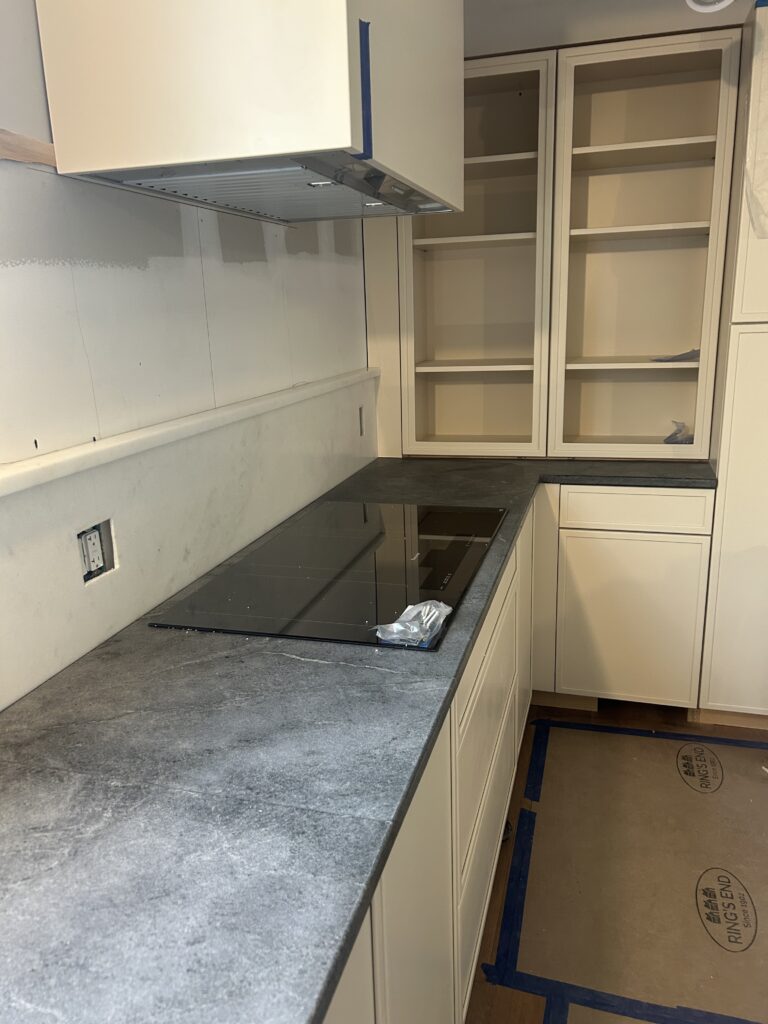
What Makes Soapstone Different?
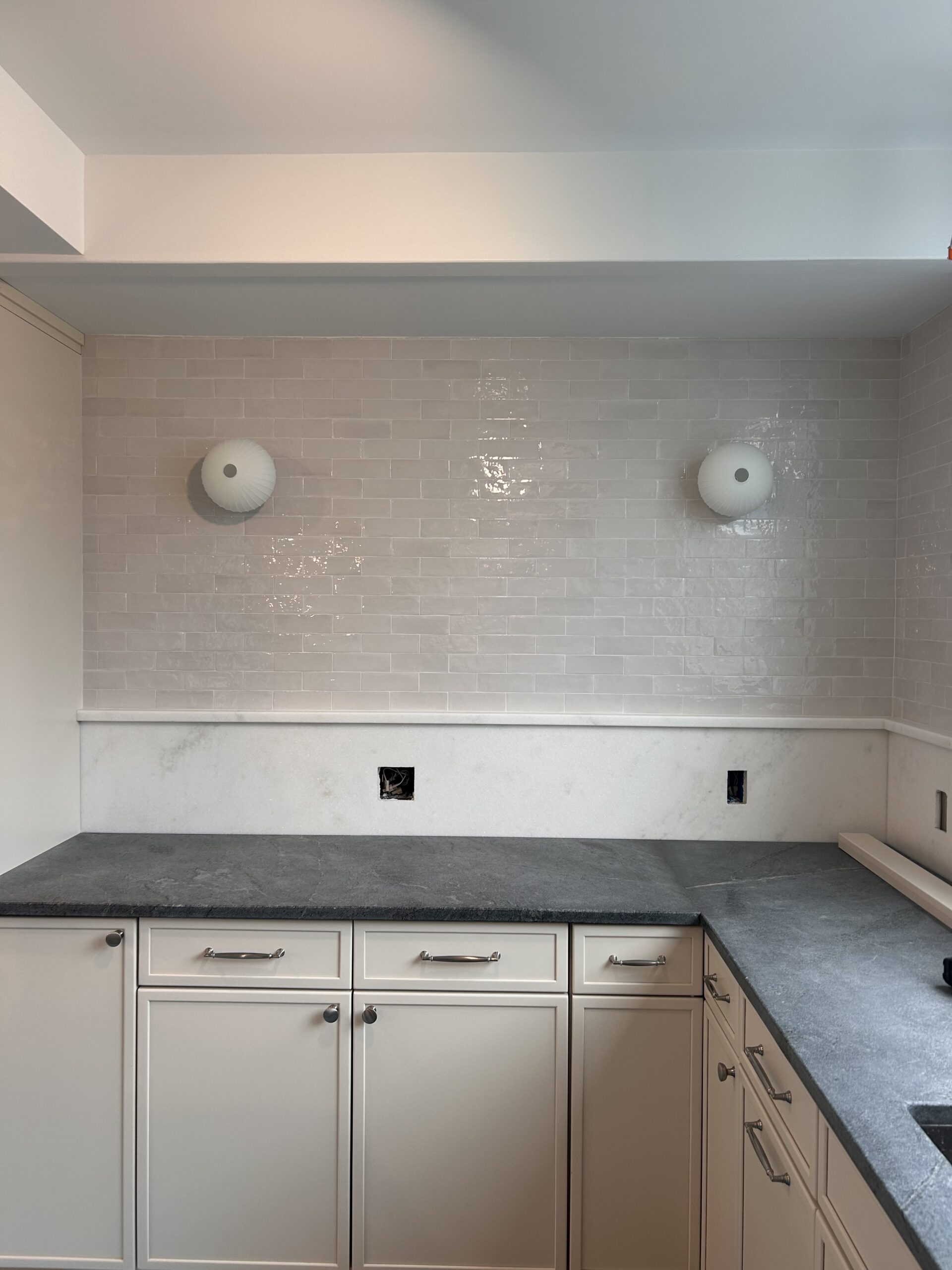
Soapstone is a natural stone with a soft, almost velvety appearance. It typically ranges from gray to deep charcoal, with subtle variations and occasional veining.
Unlike some of the more dramatic countertop stones, soapstone has a quieter presence. It works beautifully with painted cabinetry, warm wood, unlacquered brass, handmade tile, and vintage pieces, bringing a sense of history and permanence to a kitchen.
I particularly love it as a contrast to lighter materials. In a kitchen filled with whites, creams, or natural woods, darker soapstone can ground the entire room without demanding attention.
It Gets Better With Age
If you’ve read my other blogs, you know I’m drawn to interiors that feel collected rather than decorated. I love antiques, original art, natural materials, and objects that reveal a little history.
Soapstone fits naturally into that philosophy.
Over time, it develops a patina with subtle scratches, marks, and variations that become part of its character. Think of a beautiful antique wood table marked by decades of family dinners. Its imperfections are often part of what makes it special.
If you want your countertop to look exactly as it did on installation day, soapstone may not be for you. But if you appreciate materials that become more personal with age, it’s certainly worth considering.
Beautiful AND Practical
Soapstone isn’t my favorite just because it’s beautiful. It’s also a wonderfully practical kitchen surface.
Because it’s nonporous, it doesn’t absorb liquids the way some natural stones can. It’s naturally resistant to stains and heat and, unlike many other natural stones, doesn’t need to be sealed.
It is softer than granite or quartzite, so it can scratch. The good news is that minor scratches can often be sanded or blended into the surface, and over time, they tend to become part of the stone’s overall patina.
Soapstone can also be treated with mineral oil to deepen its color and create a darker, more uniform appearance. This isn’t necessary for protection; it’s simply an aesthetic choice. Left untreated, the stone will gradually darken naturally.
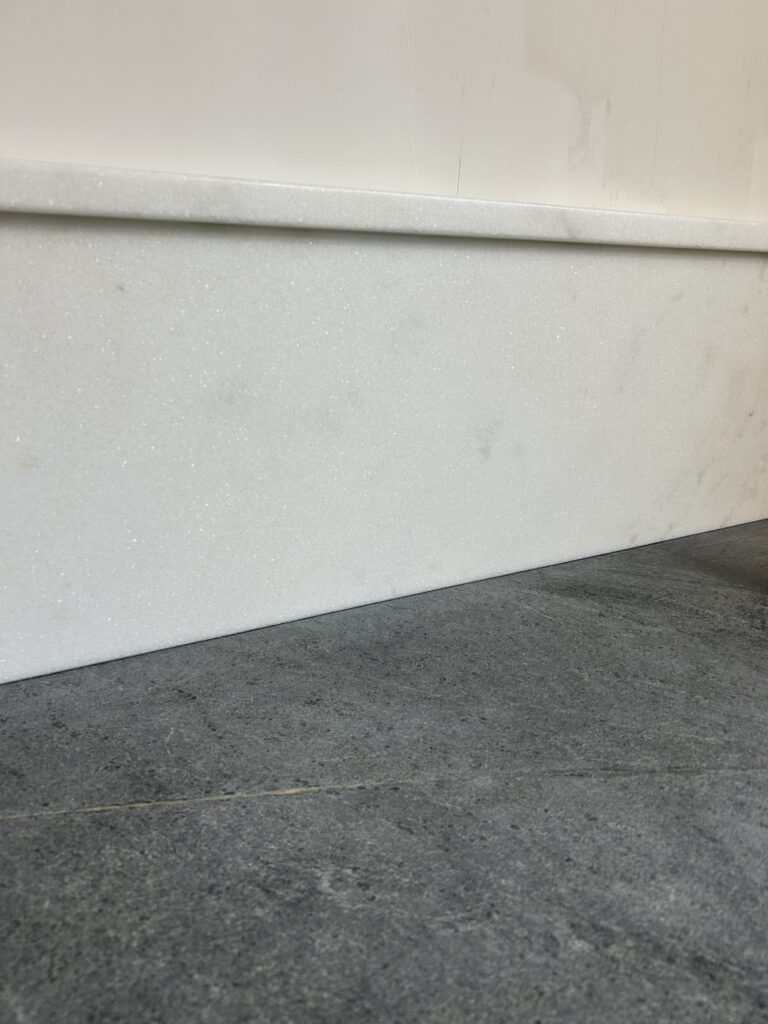
Always See the Slab in Person
As with any natural stone, I don’t recommend choosing soapstone from a small sample alone.
Some slabs are quiet and uniform, while others have much more visible veining and movement. Whenever possible, visit the stone yard and look at the actual slabs you’re considering.
Stand back to see the overall movement, then get closer to notice the details. Those natural variations are exactly what make each slab unique.
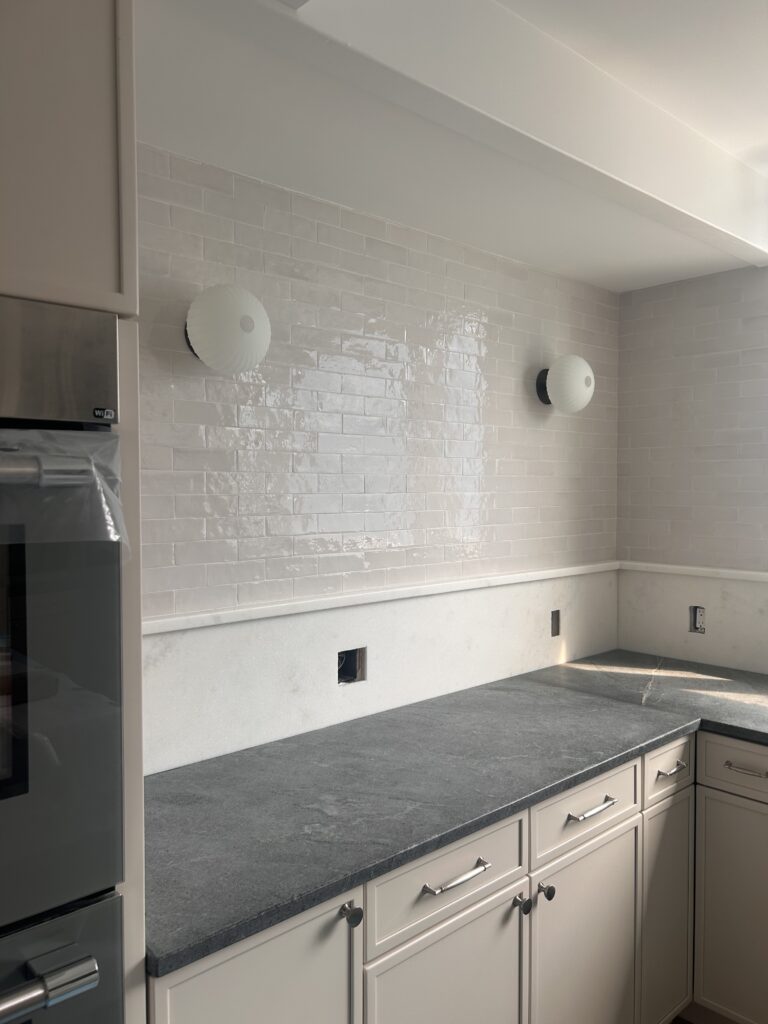
Is Soapstone Right for Your Kitchen?
Soapstone is often associated with traditional kitchens, but I don’t think it belongs to any one design style. It can be beautiful in classic New England homes, transitional kitchens, historic renovations, and more streamlined spaces.
You don’t necessarily have to use it everywhere, either. Soapstone can make a beautiful statement on an island or perimeter countertops, or it can be paired with another countertop material for contrast.
Ultimately, the best countertop isn’t simply the one that photographs beautifully. It’s the one that works for the way you live and reflects what you value in your home.
As you consider countertop materials for your own kitchen, think beyond what looks beautiful today. Consider how you want your kitchen to feel five, ten, or twenty years from now, and how you want the materials within it to evolve with you.
If you’re ready to create a kitchen with timeless materials, thoughtful details, and plenty of personality, I’d love to help.
Contact me to design a beautiful, functional kitchen that feels at home in your life now and for years to come.