

- August 24, 2026
- Debby Katz
Choosing countertop stone is one of the most exciting parts of designing a kitchen or bathroom, and one of the decisions that deserves a little more thought than simply finding the prettiest slab.
Countertops are a major visual element in a room, but they’re also hardworking surfaces you’ll interact with every day. The stone you choose needs to complement your cabinetry, flooring, backsplash, and overall design while also making sense for the way you actually live.
When I’m selecting stone with a client, I’m looking at much more than color. Here are some of the things I consider before we fall in love with a slab.
Start With How You Live
Before heading to the stone yard, think honestly about how you use your space.
Do you cook every night? Are you an enthusiastic entertainer? Do grandchildren regularly gather around the island? Are you meticulous about wiping up spills, or do you want a surface that can handle real life without much thought?
There isn’t one “best” countertop material. The best choice is the one that suits your tolerance for maintenance, wear, and patina.
For some homeowners, a little etching or aging adds character. For others, seeing the first mark on a pristine countertop will drive them crazy. It’s much better to know which person you are before installation day.
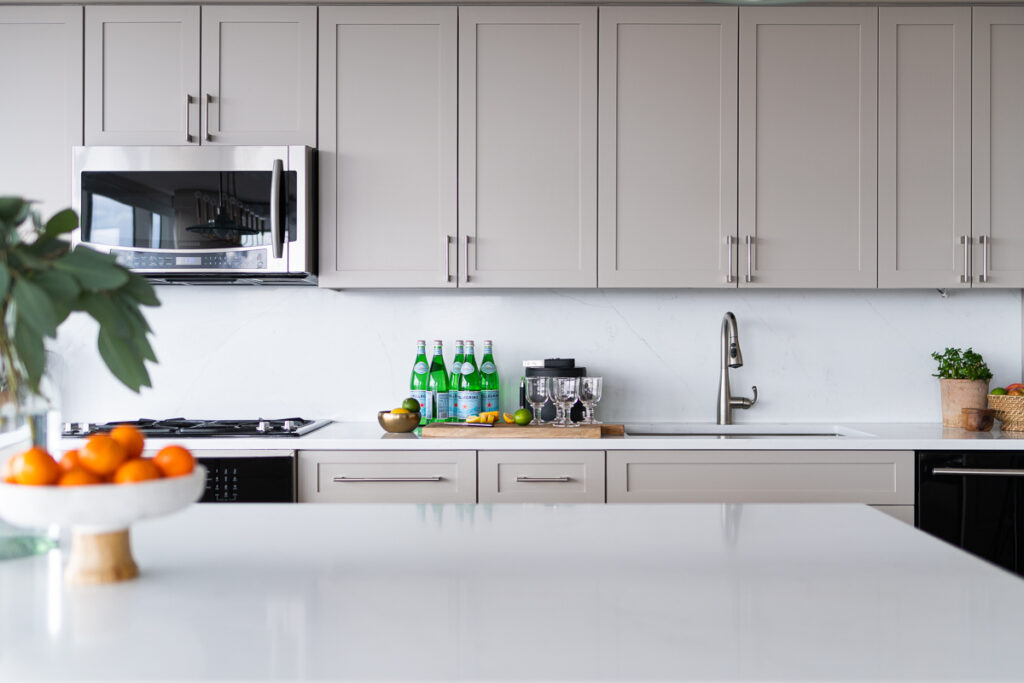
Understand Your Stone Options
There are several beautiful options available, each of which behaves differently.
Marble is timeless and incredibly beautiful. No two slabs are exactly alike, which is part of its appeal. But marble is softer and more porous than some alternatives and can etch or stain. If you love the look, you need to be comfortable with the patina it may develop over time. Natural stone can be re-honed, which helps remove some of the etching that accrues over time.
Quartzite offers the movement and organic beauty many people love about marble with greater durability. It’s become a favorite for kitchens where clients want natural stone and a more forgiving everyday surface. Quartzite is a beautiful option and has a distinctly different look (less white and more beige or gray) than traditional marbles.
Granite is extremely durable and available in far more colors and patterns than many people realize. The right slab can feel sophisticated and timeless rather than dated. My personal favorite is honed black granite for its timelessness and practicality. Its only downside is that crumbs are often very obvious, but a leathered finish can mitigate this.
Quartz is engineered rather than natural stone, but it’s worth considering for homeowners who prioritize consistency and lower maintenance. It doesn’t offer the one-of-a-kind variation of natural stone, but that predictability can also be an advantage. The downside? Unlike natural stone, Quartz cannot be repaired should it chip. Some people have noted that despite its “stain-proof” reputation, it can occasionally stain (think before using Tumeric), and placed near heat, it may yellow.
Always Look at the Entire Slab
A small sample only tells you so much.
Natural stone can change dramatically from one end of a slab to the other. A sample may show a beautiful soft vein while the full slab contains a large area of movement or color you weren’t expecting.
Whenever possible, I prefer to select the actual slabs that will be used in a project.
Step back and look at them from a distance. Then move closer and study the details. Notice the veining, color variation, fissures, and areas that naturally draw your eye.
Pay Attention to the Undertones
“White” stone is rarely just white.
It may have warm cream, cool gray, blue, taupe, green, or even subtle gold undertones. Those nuances matter when the countertop sits next to cabinetry, flooring, tile, and paint.
This is why I like to bring samples of the other major finishes when selecting slabs. Seeing your cabinet color, backsplash, flooring, and hardware alongside the stone can immediately reveal which combinations work, and which don’t.
A countertop shouldn’t be selected in isolation.
Think About the Veining
Bold veining can be spectacular, but consider where those veins will actually land once the slab is cut.
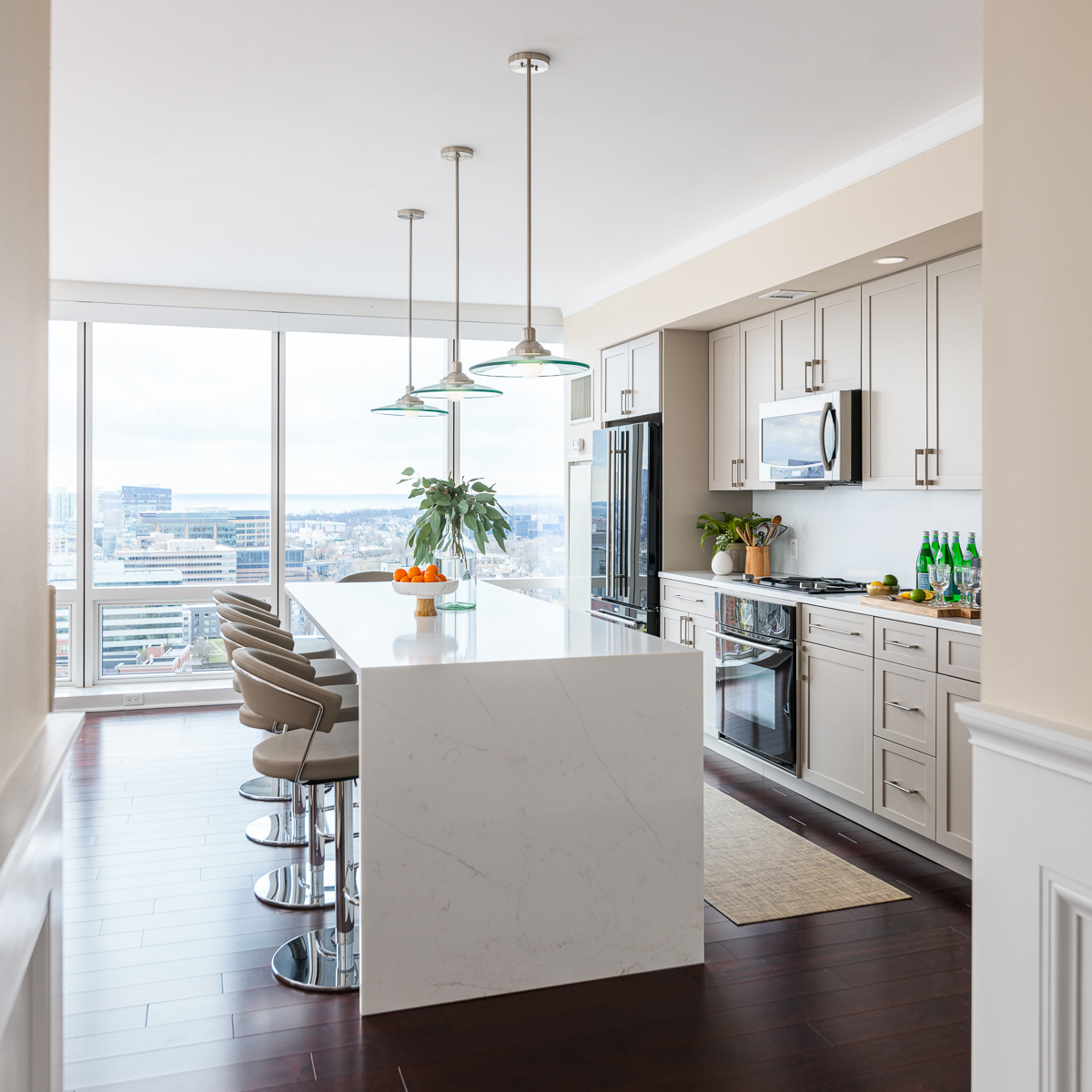
If you’re designing a large island, you may want a particularly beautiful section of the slab to become the focal point. If multiple slabs are required, you’ll also want to think about how the patterns transition from one piece to another.
This is where slab layout becomes almost like composing artwork.
The goal is to make the stone’s natural movement feel intentional within the room’s architecture.
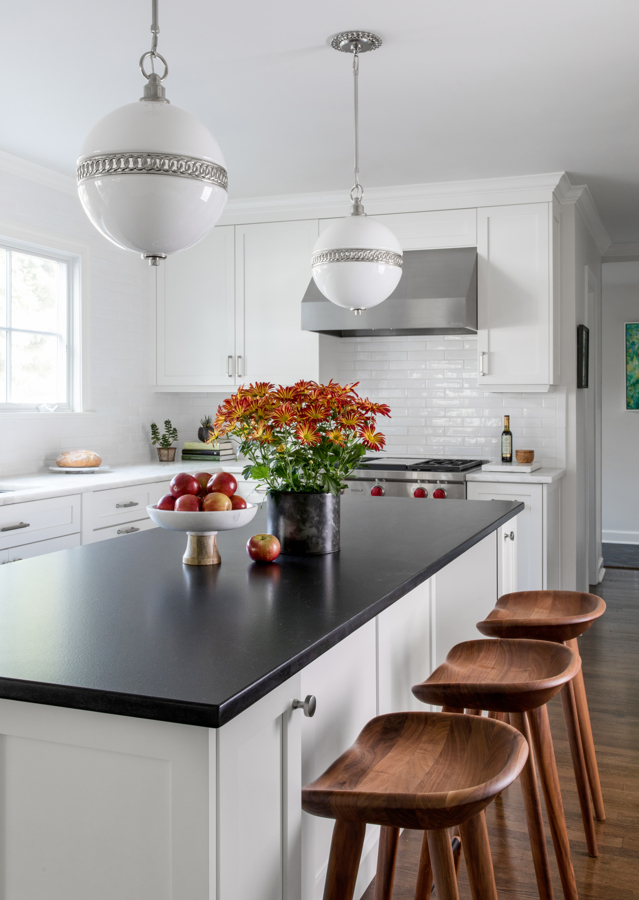
Consider the Finish
Polished isn’t your only option.
A polished finish reflects light and emphasizes the stone’s color and movement. It’s classic and often feels slightly more formal.
A honed finish has a softer, matte appearance that can feel more relaxed and understated. I particularly love it in spaces where we’re trying to create a collected, lived-in feeling.
Some stones are also available in leathered or textured finishes, which can add another layer of depth.
The same slab can look surprisingly different depending on the finish, so don’t overlook this decision.
Ask About Maintenance Before You Commit
This isn’t the glamorous part of stone shopping, but it’s important.
Ask how often the material should be sealed, which products should be used to clean it, and how it reacts to common kitchen culprits such as wine, coffee, citrus, oil, and tomato sauce.
If you’re considering marble, understand what etching actually looks like. If you’re choosing quartzite, confirm the specific stone’s characteristics rather than assuming every quartzite performs exactly the same way.
Knowing what to expect allows you to enjoy your countertops rather than worry about them.
Don’t Forget the Edge
The edge profile is a relatively small detail that can subtly change the entire feeling of the countertop.
A simple eased edge feels clean and timeless. More decorative profiles can add traditional character, while thicker or built-up edges create more visual weight.
I generally prefer details that complement the architecture and cabinetry rather than calling too much attention to themselves.
Like most good design decisions, the edge should feel like it belongs.
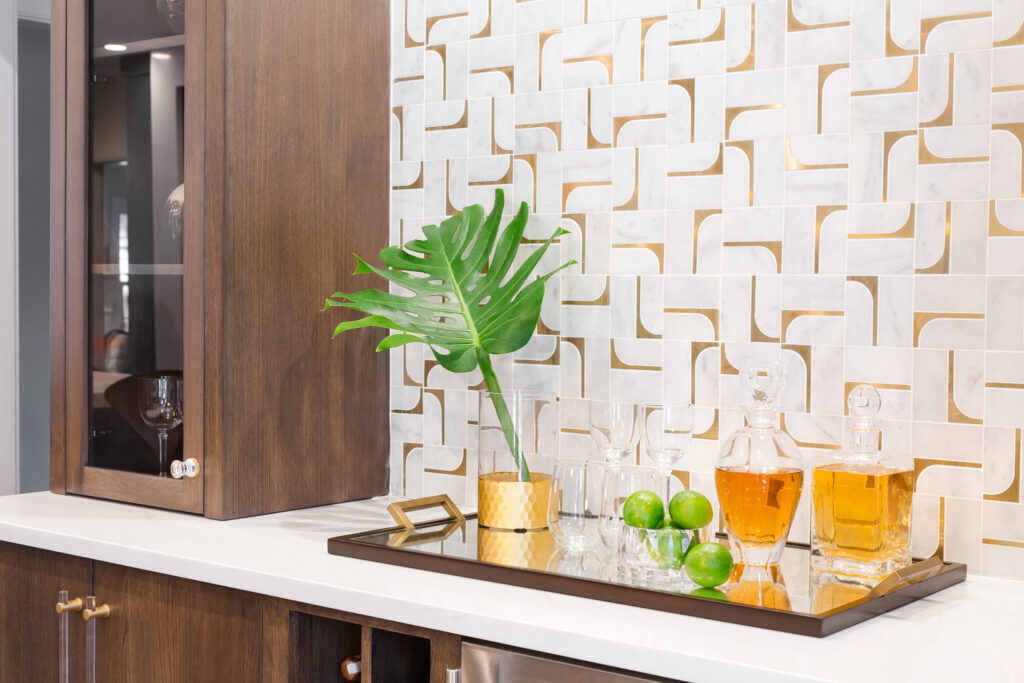
Consider the Countertop and Backsplash Together
One of the biggest decisions to make early is whether your countertop and backsplash will be two different materials or whether the stone will continue up the wall.
A slab backsplash can create a beautiful, uninterrupted moment and allow particularly striking veining to become a focal point. Tile, on the other hand, introduces another opportunity for texture, pattern, and personality.
Neither is inherently better. It depends on what the room needs.
The important thing is to consider them together rather than selecting your countertop and treating the backsplash as an afterthought.
Think Beyond What’s Trending
Countertops are an investment, and replacing them isn’t as simple as swapping out a pillow or repainting a room.
Rather than choosing a stone because you’re seeing it everywhere, look for something that complements your home’s architecture and the other materials you’re using.
Natural stone is inherently timeless. Let its character lead the design instead of forcing it to follow a trend.
See Everything Together Before Saying Yes
Some of my favorite moments in the design process happen when all the pieces finally come together: the cabinet sample, hardware, flooring, backsplash, paint, and countertop stone.
Each selection individually can be beautiful. But what matters is how they speak to one another.
That’s ultimately what you’re looking for when selecting countertop stone—not simply a beautiful slab, but the right beautiful slab for your home.
As you plan your kitchen or bathroom, remember that countertop stone is both a design decision and an everyday living decision. The right material should complement your space beautifully while supporting the way you actually use it.
If you’re ready to create a kitchen or bathroom where every material feels thoughtfully considered, I’d love to help.
Contact me to design a beautiful, functional space tailored to your home and your next chapter.