

- July 29, 2026
- Debby Katz
One of the questions I’m asked most often is:
“How do designers mix so many patterns without making a room feel busy?”
The answer isn’t about following complicated rules. It’s about creating balance.
Pattern is one of the easiest ways to give a home personality. It adds movement, warmth, and visual interest that solid fabrics alone simply can’t achieve. But when every pattern competes for attention, the room begins to feel chaotic instead of collected.
The purpose isn’t to avoid patterns. It’s to layer it thoughtfully.
Start With One “Lead” Fabric
Every room benefits from having one fabric that sets the tone.
This might be:
- A floral fabric on drapery
- A patterned area rug
- An upholstered chair
- A large-scale wallpaper
Think of this as your anchor. It establishes the room’s color palette and becomes the reference point for every other textile you introduce. Once you have that foundation, everything else becomes much easier.
Vary the Scale
One of the biggest mistakes people make is choosing patterns that are all the same size.
Instead, mix:
- One large-scale pattern
- One medium-scale pattern
- One small-scale or subtle pattern
For example: A bold floral pillow pairs beautifully with a medium stripe and a small geometric print.
The variety allows each fabric to stand on its own without competing for attention.
Repeat Your Colors
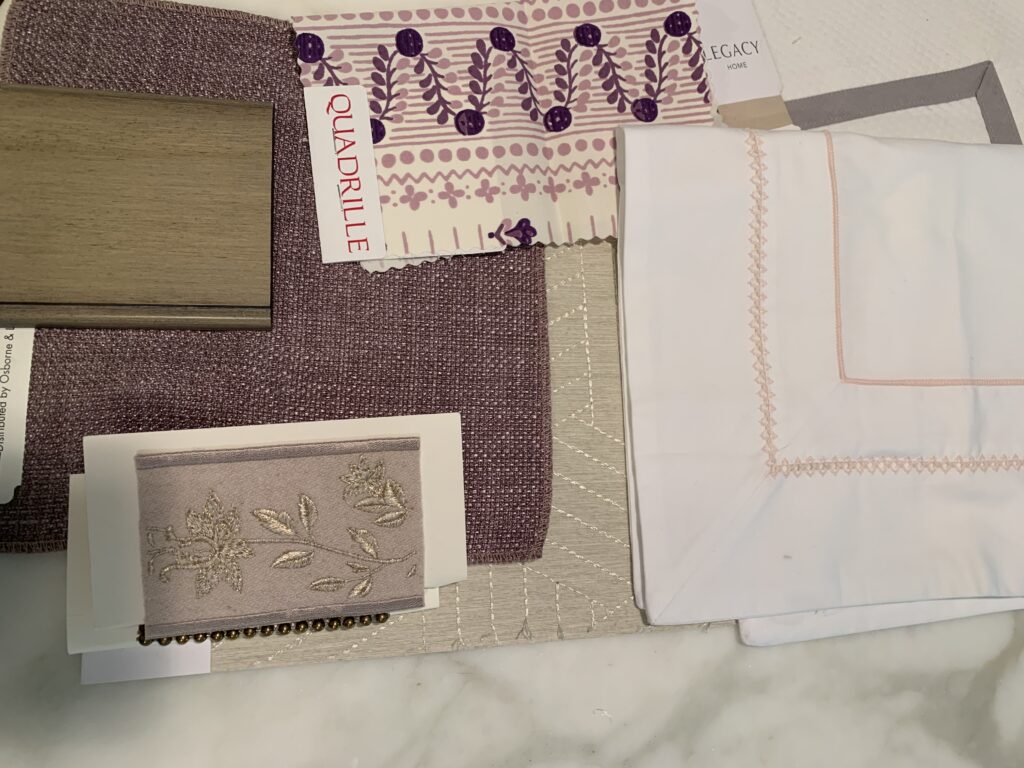
When different patterns share similar colors, they naturally feel connected.
Your fabrics don’t need to match, but they should relate.
A blue found in a floral print can be echoed in a stripe. A soft green from a botanical fabric might appear again in a plaid.
Repeating colors creates harmony, even when the patterns themselves are quite different.
Mix Pattern Types
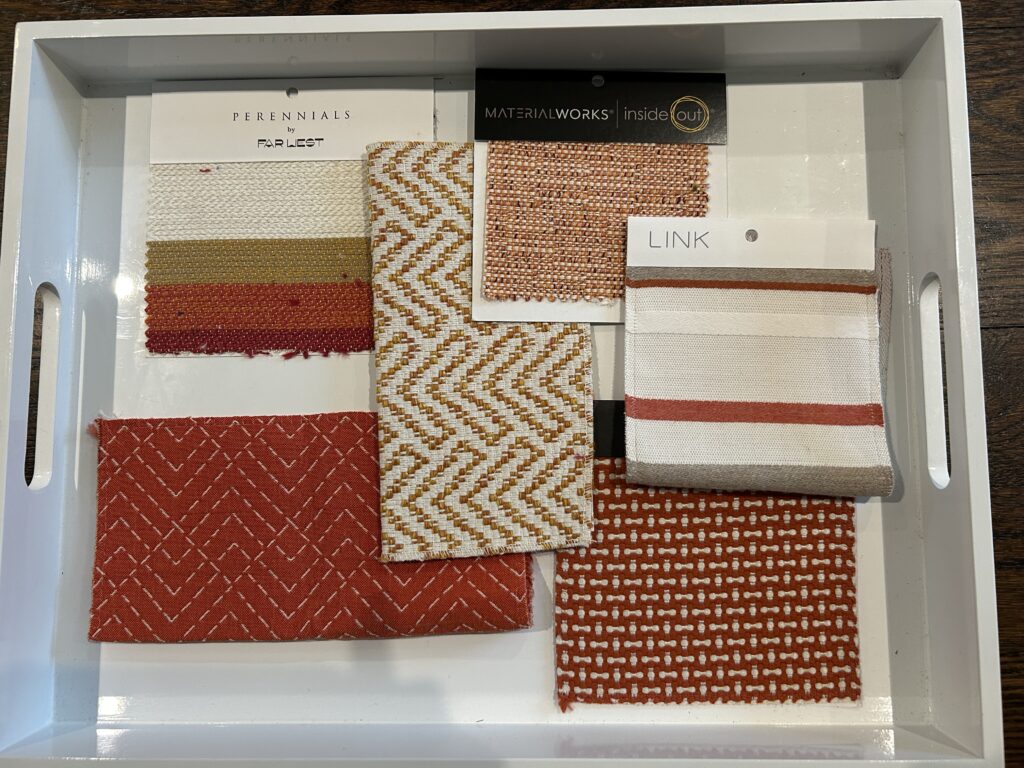
Some of the most interesting rooms combine different kinds of patterns.
Try pairing:
- Florals
- Stripes
- Plaids
- Geometrics
- Botanical prints
- Small-scale textures
When every pattern belongs to the same family—for example, all florals—the room can actually feel less dynamic. Contrast creates interest.
Don’t Forget Texture
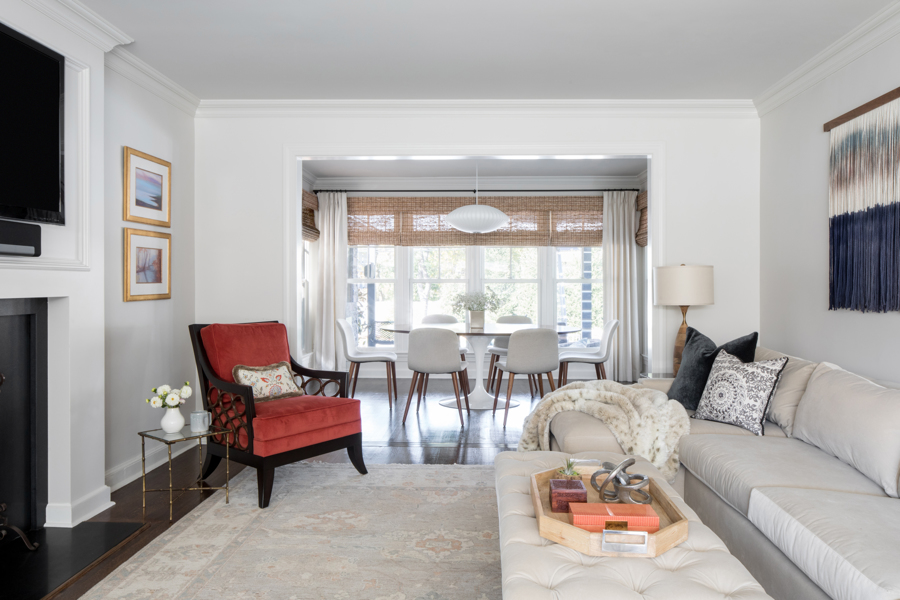
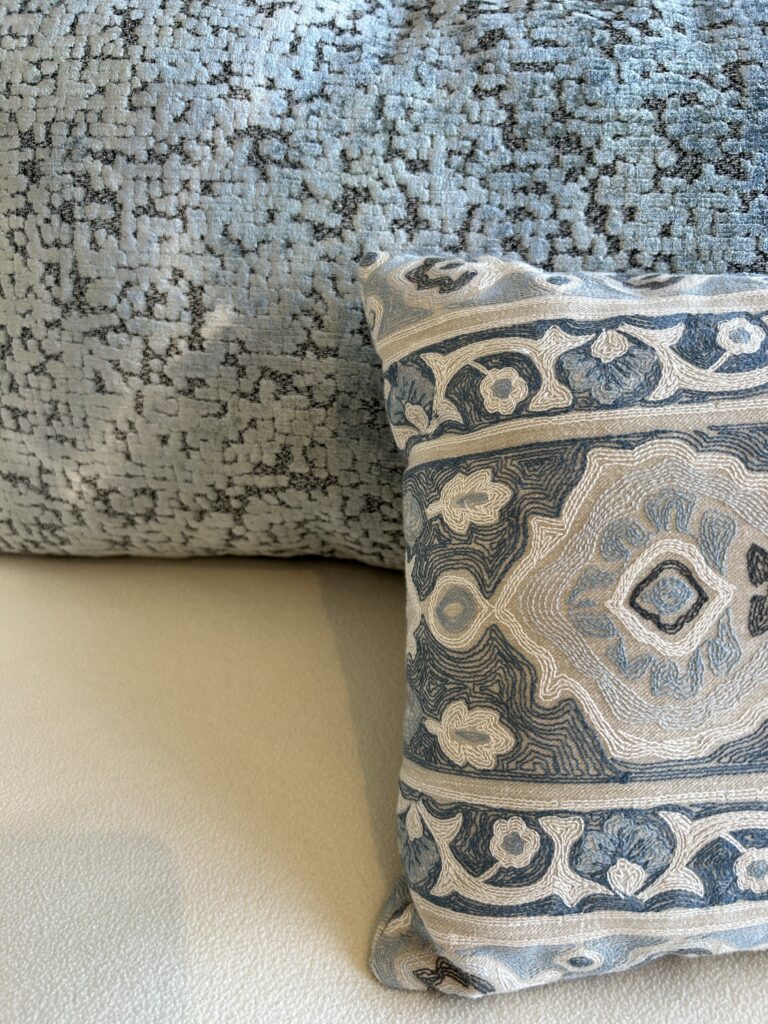
Texture acts almost like another pattern.
Woven linens, embroidered fabrics, velvet, grasscloth wallpaper, leather, natural wood, and woven baskets all add richness without introducing another print.
Some of my favorite rooms aren’t filled with dozens of bold patterns. They simply layer beautiful textures together. Texture gives the eye a place to rest.
Let Solids Do Some of the Work
Every room needs moments of quiet.
Solid upholstery, painted walls, or simple bedding help balance more decorative fabrics.
Without these visual breaks, even beautiful patterns can begin to feel overwhelming.
Think of solids as negative space in a painting. They allow everything else to shine.
Pattern Doesn’t Have to Match
This is where many homeowners get stuck.
Matching is not the goal. Coordinating is.
A room feels far more interesting when the fabrics look like they were collected over time rather than purchased as a matching set.
That’s one of the reasons I often mix vintage textiles with newer fabrics. The combination creates warmth, character, and authenticity that can’t be achieved with perfectly coordinated pieces.
Trust the Overall Feeling
When I’m designing a room, I rarely look at one pillow or one fabric by itself. I step back and look at the room as a whole.
When the scale is balanced, the colors relate, and the textures are layered, the room feels effortless—even though every detail has been carefully considered.
That’s the difference between a room that feels decorated and one that feels collected.
Mixing patterns doesn’t require a designer’s eye as much as it requires confidence and restraint.
Choose an anchor fabric, vary your scales, repeat your colors, and remember that texture is just as important as pattern. Most importantly, don’t strive for perfection. The most beautiful homes feel layered, personal, and lived in.
As you think about layering patterns into your own home, remember that the most inviting interiors balance color, texture, and scale with intention.
If you’re ready to create a home that feels collected, timeless, and uniquely your own, I’d love to help.
Contact me to design a home that beautifully reflects your personality and the way you live.