

- November 18, 2026
- Debby Katz
[Featured image is AI-generated]
As the season of gathering with family and friends approaches, we tend to think about preparing our homes for guests. But creating a welcoming space goes beyond setting the table or adding a few seasonal touches. Some of the most inviting homes are thoughtfully designed to bring people together, and that starts with how we arrange the furniture.
Your living room is often where everyone naturally gravitates, whether you’re hosting a group of friends, enjoying a quiet evening with family, or settling in for a conversation over coffee. The right furniture layout can make these moments feel effortless, creating a space that’s as comfortable as it is beautiful.
Here are a few of my favorite living room layout ideas for making entertaining easier while creating a space you’ll love spending time in every day.
1. Arrange Furniture to Encourage Conversation
One of the first things I consider when designing a living room is how people will interact within the space. While it’s tempting to arrange all the furniture around the television or fireplace, this doesn’t always create the most comfortable setting for conversation.
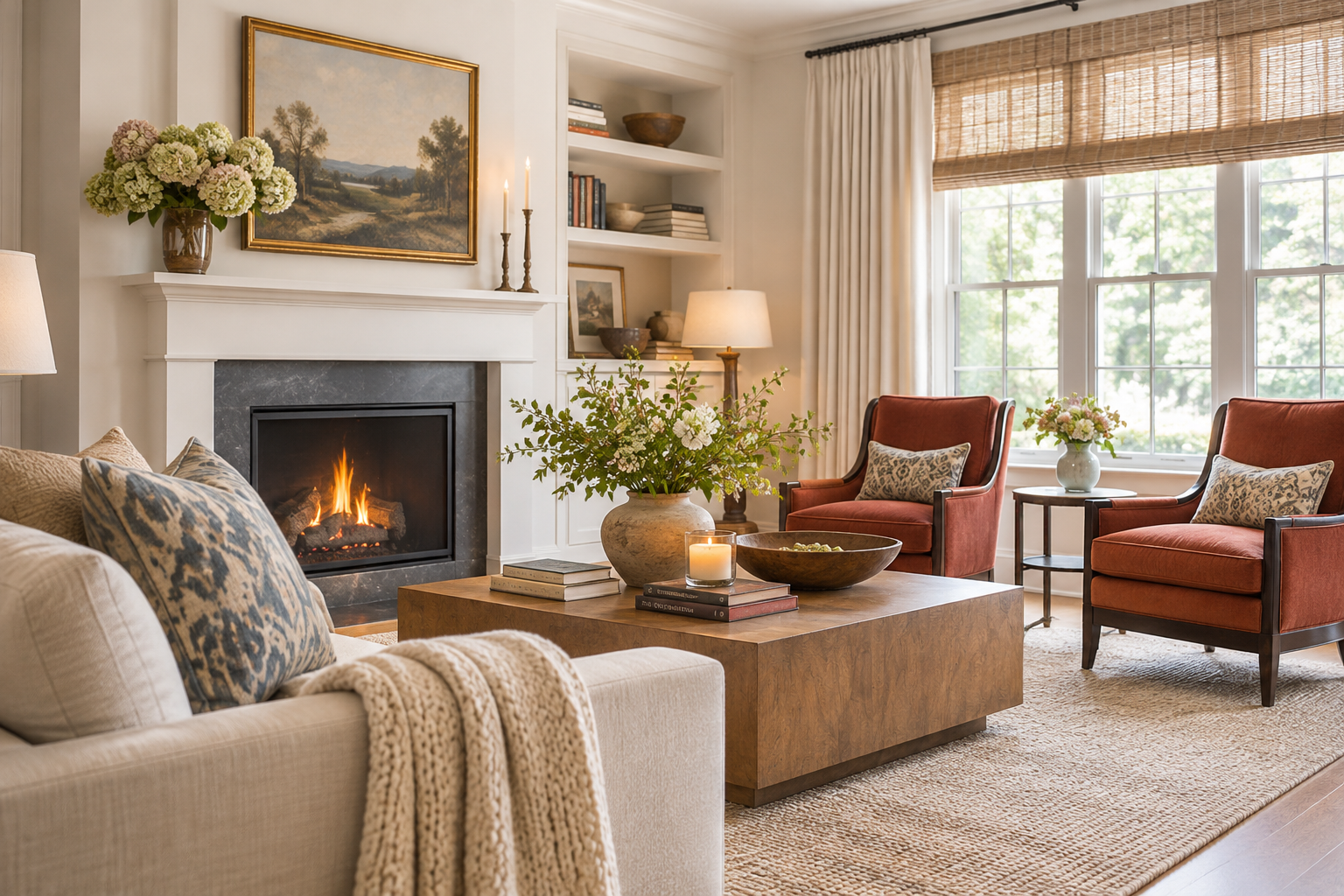
Instead, arrange your furniture so people can comfortably face one another. A sofa paired with two upholstered chairs is a classic arrangement that works beautifully in many living rooms. Positioning chairs across from or at an angle to the sofa creates a natural conversation area without making the space feel overly formal.
In larger rooms, two sofas facing each other can create a balanced, intimate seating arrangement. For smaller spaces, a loveseat and a pair of chairs might accomplish the same goal.
The key is to keep seating close enough that guests can talk comfortably without raising their voices or turning awkwardly to participate.
Design Tip: Don’t feel that every piece of furniture needs to sit against a wall. Bringing seating inward can actually make a room feel more inviting and help define the space.
2. Create Multiple Seating Areas in Larger Living Rooms
If you have a spacious living room, filling it with one oversized furniture arrangement isn’t always the best solution. Instead, create smaller seating areas that let guests gather in different ways.
You might have a primary seating group centered around a coffee table, with a secondary arrangement of two accent chairs and a small table near a window. This gives guests options and allows conversations to happen naturally throughout the room.
I particularly love incorporating a beautiful vintage chair, an antique side table, or an interesting upholstered bench into these smaller seating areas. These pieces add character while serving a practical purpose.
The result is a room that feels thoughtfully layered rather than simply filled with furniture.
3. Choose Seating That’s Beautiful AND Comfortable
We’ve all experienced a beautiful living room where the furniture looks wonderful but isn’t particularly comfortable.
When designing a space for entertaining, comfort should always be part of the conversation.
Consider the depth of your sofa, the height of your chairs, and how easily guests can sit down and get back up. A deep, plush sofa might be perfect for lounging with family, while a more upright upholstered chair can be a better option for conversation.
Including a variety of seating styles makes a room more accommodating for guests of different ages and preferences.
I also love incorporating ottomans and upholstered benches when space allows. They can provide additional seating when you’re entertaining without requiring another full-size chair.
And remember, comfort doesn’t mean sacrificing style. Beautiful upholstery, interesting textures, and thoughtfully selected furniture can create a room that feels both sophisticated and relaxed.
4. Pay Attention to the Flow of the Room
One of the most important aspects of a successful living room layout is something you might not notice right away: how easily you can move through the space.
When entertaining, guests should be able to walk between seating areas, reach a side table, or move into an adjoining room without navigating a furniture obstacle course.
As a general guideline, I like to allow approximately 30 to 36 inches for major walkways whenever possible. The exact spacing depends on the room, but the goal is to create clear, comfortable paths.
Also consider the relationship between furniture pieces. A coffee table should be close enough to the sofa to be useful, typically around 16 to 18 inches away, without making the seating area feel cramped.
These small decisions can make a significant difference in how a room functions. A thoughtfully planned layout should feel natural. You shouldn’t have to think about how to move through the room because everything is already where it needs to be.
5. Make Sure Every Seat Has a Place to Set Something Down
This is one of those practical details that’s easy to overlook, but it makes a tremendous difference when entertaining.
Imagine sitting in a beautiful accent chair with a drink in your hand and nowhere nearby to set it down. Not exactly ideal!
I always think about how each seating area will be used and whether guests can easily reach a coffee table, side table, or another convenient surface.
This is also a wonderful opportunity to incorporate pieces with personality. An antique occasional table, a vintage wooden stool, or a unique stone-topped table can add interest while serving a functional purpose.
Not every table needs to match, either. In fact, I often prefer a mix of materials, finishes, and styles. These collected combinations help a room feel personal and give it a sense of history.
6. Use Rugs and Lighting to Define the Space
Furniture placement is only one part of creating a welcoming living room. Rugs and lighting also play important roles in completing a seating arrangement.
A properly sized area rug helps anchor the furniture and visually connects the pieces within a conversation area. In many living rooms, having at least the front legs of the main seating pieces resting on the rug creates a cohesive arrangement.
Lighting is equally important. While overhead lighting provides general illumination, table lamps and floor lamps create softer, more inviting pools of light throughout the room. When entertaining in the evening, these layers of lighting can make the space feel warm and comfortable rather than overly bright.
I also love the way a thoughtfully placed lamp can highlight a favorite piece of artwork, an antique, or a collection of meaningful objects.
These details help create an atmosphere that encourages people to settle in and stay awhile.
7. Let Your Living Room Reflect Your Personality
A well-designed living room should do more than accommodate guests. It should tell a little of your story.
Some of my favorite interiors are those that combine beautiful furnishings with art, antiques, handmade pieces, and objects collected over time.
A vintage chair might sit alongside a contemporary sofa. An inherited table might become the perfect piece between two upholstered chairs. Artwork collected during your travels might inspire the room’s color palette. These are the elements that make a home memorable.
And when it comes to entertaining, a room filled with personal touches naturally encourages conversation. Guests notice an unusual piece of artwork, ask about a favorite antique, or connect over something meaningful displayed in your home.
Your living room doesn’t need to look like a showroom. It should reflect the people who live there.
A Living Room Designed for Everyday Living and Entertaining
The best living room layouts aren’t designed exclusively for special occasions. They work just as beautifully on an ordinary Tuesday evening as they do when your home is filled with friends and family.
Thoughtful furniture placement, comfortable seating, clear pathways, and a mix of meaningful pieces all contribute to a space that feels welcoming and easy to enjoy.
And while entertaining might be on your mind this time of year, these design decisions will continue to serve you long after the holiday season has passed.
At Debby Katz Interiors, I believe the most beautiful homes are also the ones that feel personal, comfortable, and truly lived in.
If you’re ready to rethink your living room layout or create a more inviting space for everyday living and entertaining, I’d love to help you bring that vision to life.
Contact me to get started on your next design project.